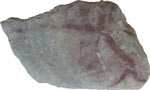
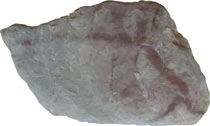
Sedimentary rocks are formed by sediment that is deposited over time, usually as layers at the bottom of lakes and oceans.
This sediment can include minerals, small pieces of plants and other organic matter.
The sediment is compressed over a long period of time before consolidating into solid layers of rock.
Sedimentary rocks forms layers called strata which can often be seen in exposed cliffs.
Sedimentary rocks cover the majority of the Earth's rocky surface but only make up a small percentage of the Earth’s crust compared to metamorphic and igneous types of rocks.
Examples of sedimentary rocks include limestone, sandstone, mudstone, greywacke, chalk, coal, claystone and flint.
Limestone forms the metamorphic rock marble when subjected to extreme heat and pressure over time (metamorphism).
Sandstone forms the metamorphic rock quartzite.
Mudstone forms the metamorphic rock slate.
Chalk is a soft, white form of limestone.
Flint is a hard, sedimentary form of the mineral quartz.
Learn about igneous rocks, metamorphic rocks, other rocks and minerals or fossils.
Make a fossil cast or check out our rock sorting lesson plan.